Pages

Showing posts with label A230. Show all posts

Tuesday, 30 April 2013

ZZZs at last! - An A-Z post

So today is the last day of the 2013 A-Z Blogging Challenge. I certainly have found it to be a challenge this year.

Even though I had my topics outlined for each day, it was still a lot of effort at times to actually sit down and get the posts written. Once again the challenge has shown me how much I could improve with my organisation.

I've been having some very odd dreams this month, hence the title of this post, and there are some nights I've woken up in a panic because I think I've missed the correct letter and post for that day. When I've finally woken up properly I realise all is well, but in the middle of the night these things feel like the end of the world if it's not been done.

I'm definitely looking forward to some more restful nights sleep now, and to next years challenge too. I promise I'll try and be more organised for the next one!


A to Z Challenge [2013]

  ~~~~~~~~~~~~~~~~~~~~~~~~~~~~~~~~~~~~~~~~~~~   

This post is part of the A-Z Blogging Challenge. To get involved and check out other blogs taking part just click here. You won't be disappointed!


   ~~~~~~~~~~~~~~~~~~~~~~~~~~~~~~~~~~~~~~~~~~~

Saturday, 27 April 2013

eXam fever! - An A-Z post

Picture from rdulal.blogspot.com
OK, so I know I'm cheating a little here, but X really can be a hard letter to find a topic for. Plus, my life is revolving around and gearing up for my exam in *gulp* 46 days.

I've sat exams before, the last one was in 2010, but they've always been for more straightforward subjects. With anything mathematical or scientific it was usually a case of learning particular processes and equations and symbols and things.

I'm finding that revising for literature though is a whole different kettle of fish. I don't even know where to begin with revision. Do I just sit and re-read the set texts over and over? Look through the associated course material, learning the background and context for each of them?

One advantage is that we've been given advanced notification of what is being assessed in the actual exam. There are three parts, each consisting of three questions and we have one hour to answer one question from each part.
Having looked through what the questions cover I've narrowed down my choices to five of the eleven set texts.

This in itself goes a long way to improving my prospects, all I need to do now is come up with a suitable strategy for covering as much of the topics as I can in preparation.

I'm hoping that the tutorial today is going to point me in the right direction for some active revision and reassure me that all will go well!


A to Z Challenge [2013]

  ~~~~~~~~~~~~~~~~~~~~~~~~~~~~~~~~~~~~~~~~~~~   

This post is part of the A-Z Blogging Challenge. To get involved and check out other blogs taking part just click here. You won't be disappointed!


   ~~~~~~~~~~~~~~~~~~~~~~~~~~~~~~~~~~~~~~~~~~~

Friday, 26 April 2013

William Wordsworth - An A-Z post

Picture from www.bbc.co.uk
William Wordsworth is the first poet to be studied in this course. His name is synonymous with the Lake District, and Dove Cottage in particular is where he spent much of his writing career. This little cottage near Grasmere is now a museum, along with Rydal Mount where Wordsworth lived until his death in 1850.

A poet of the Romantic period, Wordsworth's style included dramatising the figure of the poet in his work, and using the solace of memory as the foundation of identity.

One of his most famous pieces is the 'Daffodils' poem, which at first glance would appear to be a spontaneous recollection of a singular experience. Background reading around this subject however reveals that this may not be wholly the case, and his sister Dorothy kept meticulous journals of their walks and journeys together. It is thought these journals were used to inspire and refresh Wordsworths own memories of experiences so that he could turn them into something poetic.

Dorothy's journals were kept private for many years, at the time a womans writing wouldn't have had anywhere near the recognition that William received for his poetry. Some of her journals have now been published though and it is clear that she must have had some influence on her brothers work.


Daffodils

I wandered lonely as a cloud
That floats on high o'er vales and hills,
When all at once I saw a crowd,
A host, of golden daffodils;
Beside the lake, beneath the trees,
Fluttering and dancing in the breeze.

Continuous as the stars that shine
And twinkle on the milky way,
They stretched in never-ending line
Along the margin of a bay:
Ten thousand saw I at a glance,
Tossing their heads in sprightly dance.

The waves beside them danced; but they
Out-did the sparkling waves in glee:
A poet could not but be gay,
In such a jocund company:
I gazed--and gazed--but little thought
What wealth the show to me had brought:

For oft, when on my couch I lie
In vacant or in pensive mood,
They flash upon that inward eye
Which is the bliss of solitude;
And then my heart with pleasure fills,
And dances with the daffodils. 


Poem taken from http://www.poemhunter.com


A to Z Challenge [2013]

  ~~~~~~~~~~~~~~~~~~~~~~~~~~~~~~~~~~~~~~~~~~~   

This post is part of the A-Z Blogging Challenge. To get involved and check out other blogs taking part just click here. You won't be disappointed!


   ~~~~~~~~~~~~~~~~~~~~~~~~~~~~~~~~~~~~~~~~~~~

Thursday, 25 April 2013

Voltaire, Candide - An A-Z post

Picture from au.fil.des.livres.over-blog...
Voltaire was born as Francois-Marie Arouet in 1694. To please his father he became a law student but his mania for writing meant that from 1715 he decided to work exclusively on his writing.

Once settled into his chosen vocation he spent much of his life swinging back and forth with regards to popularity.
He spent his first term in prison in 1717-18 for writing a satire against the Regent, but found favour again in 1725 when three of his plays were chosen to be performed at the wedding of King Louis XV.

The following year he fled to England, where he met King George I as well as many others in the literary and scientific elite. He was in disfavour in his home country and lived in exile through much of the 1730s.

The 1740s saw him rise in popularity again as he became a major figure on the European stage, but by 1754 he'd quarreled with his former friend Frederick of Prussia and was refused entry into France.
Finally he settled in Switzerland and his publishing began to take off from there.

In 1759, Candide was published, with three simultaneous editions in Paris, Geneva and Amsterdam. The idea behind this was to sell as many copies as possible before it became pirated or censored. The authorities tried their best to suppress it and it went through many editions in its life.

The story centres on Candide, whose philosophy teacher has always taught him that whatever happens 'all is for the best'. After being cast out from his home, he embarks on a journey that will take him all over the world to encounter all manner of things - earthquakes, syphilis, murder. All of these test him to the limits when trying to stick to his old teachers philosophy.


A to Z Challenge [2013]

  ~~~~~~~~~~~~~~~~~~~~~~~~~~~~~~~~~~~~~~~~~~~   

This post is part of the A-Z Blogging Challenge. To get involved and check out other blogs taking part just click here. You won't be disappointed!


   ~~~~~~~~~~~~~~~~~~~~~~~~~~~~~~~~~~~~~~~~~~~

Understanding Literature - An A-Z post

To me, literature is one of those things that you presume you must know something about, but when you actually stop to think about what it actually means I come up a little short.

When I think of literature, my mind wanders to period dramas based on Jane Austen or Charles Dickens, and I've often thought it applied to works written before the 20th Century.

Studying my current module has changed my views, particularly as we have been reading texts from this century. It's not necessarily the era that determines whether something is considered to be literature or not.

It's more about what the text has to say, the message it's trying to get across. The story or theme may be meant as a statement about the times and places the author is living in, or an optimistic look into the future.

I'm still relatively new to this way of thinking about books and what I'm reading, and I love how my ideas are evolving as I learn more about styles, authors and eras.

What are your thoughts on what literature is?


A to Z Challenge [2013]

  ~~~~~~~~~~~~~~~~~~~~~~~~~~~~~~~~~~~~~~~~~~~   

This post is part of the A-Z Blogging Challenge. To get involved and check out other blogs taking part just click here. You won't be disappointed!


   ~~~~~~~~~~~~~~~~~~~~~~~~~~~~~~~~~~~~~~~~~~~
Wednesday, 24 April 2013

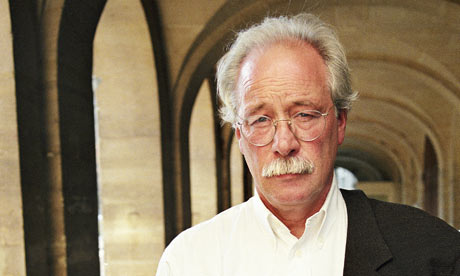
The Emigrants, W G Sebald - An A-Z post

Picture from www.guardian.co.uk
I realise this post is cheating a little bit and really should be under 'E' for Emigrants, but I've been struggling with 'T' so I'm making full use of the 'T' in 'The'!

The Emigrants is by W G Sebald, and is the last text to be read as part of this OU course. As such, it means that I haven't actually read it yet but I've been doing a little reading about it which I can share in this post.

The Emigrants features a narrator and four other characters: a doctor, a teacher, a butler and a painter. All of these characters are surviving in a post-World War II landscape and dealing with it in their own way. The themes of the book inculde exile, loss, imagination and madness.

I'm intrigued by the author himself too. He was born in Bavaria in 1944, and his father was a prisoner of war for until 1947.
He studied for a degree in German literature at the University of Fribourg and became a research student at University of Manchester in 1966.

Following this, in 1970 he became a lecturer at the University of East Anglia and was appointed chair of European literature here in 1987. This I find fascinating as the place I work is only a ten minute walk from the University and it's ground are well known to me.
He died in 2001 in a car crash near Norwich and is buried in a village just south of the city. I never knew that a highly regarded writer such as Sebald had lived much of his life in and around the area where I have grown up.


A to Z Challenge [2013]

  ~~~~~~~~~~~~~~~~~~~~~~~~~~~~~~~~~~~~~~~~~~~   

This post is part of the A-Z Blogging Challenge. To get involved and check out other blogs taking part just click here. You won't be disappointed!


   ~~~~~~~~~~~~~~~~~~~~~~~~~~~~~~~~~~~~~~~~~~~

Monday, 22 April 2013

Shakespeare, William: Othello - An A-Z post

Picture from theshakespeareblog.com
Born in 1564 in Stratford-upon-Avon, William Shakespeare is probably the most well known English playright and poet. A staple of most academic English departments, by the time you leave high school you will at least know something about the 'Bard of Avon'.

Othello is the text of choice for this particular course, and is read alongside The Duchess of Malfi. Both are tragedy plays in which the main protaganist endures some kind of hardship and eventually ends up dead in some way.

Othello is a Moor who secretly marries the daughter of the Venetian senator. Although well respected as a soldier in the military, the mixed marriage causes upset for his new father-in-law.
In addition to this, Othello overlooks his ensign Iago for promotion, instead making Cassio his lieutenant. This does not sit well with Iago, who vows to get revenge for this oversight not only on Othello, but Cassio as well.
He proceeds to manipulate everyone within his circle, including his own wife, to this end and manages to get inside Othello's head and make him doubt his wife's commitment to him.

As with tragedy plays of this era there is plenty of bloodshed by the close of the play, with the main culprit at least escaping with his life if not his freedom.

Over the next two months I will get to know this play particularly well as it is one of the set texts on the exam, along with The Duchess of Malfi.


A to Z Challenge [2013]

  ~~~~~~~~~~~~~~~~~~~~~~~~~~~~~~~~~~~~~~~~~~~   

This post is part of the A-Z Blogging Challenge. To get involved and check out other blogs taking part just click here. You won't be disappointed!


   ~~~~~~~~~~~~~~~~~~~~~~~~~~~~~~~~~~~~~~~~~~~

Saturday, 20 April 2013

Robert Louis Stevenson - An A-Z post

Picture from www.scotiana.com
Robert Louis Stevenson was born in 1850 in Edinburgh, his father was a lighthouse engineer and his mother's family were lawyers and clergymen. He was born into a very respectable family.

As a child, Stevenson was very sickly and was often off school and being cared for at home. He allowed his mind to wander through reading, and his favourite tales were often about far away lands.

When he grew up, Stevenson became one of the most successful writers of his era and also was a celebrated traveller. He started journeying away from home, further afield each time, and soon considered himself a man of the world.

In 1888, he left home for the Pacific and never returned, which scandalised the Victorian British society. He married an American lady and they lived their lives in Samoa amongst the natives, fully immersing themselves in the local lifestyles.

Stevenson died in 1894 and is buried on Mount Vaea overlooking the sea. His own 'Requiem' is inscribed on his tomb, written in the days when he felt himself becoming ill, knowing the end would come unexpectedly.

Under the wide and starry sky,
Dig the grave and let me lie.
Glad did I live and gladly die,
And I laid me down with a will.
This be the verse you grave for me:
Here he lies where he longed to be;
Home is the sailor, home from sea,
And the hunter home from the hill.
 
 Poem from http://www.poetry-archive.com


Stevenson's most famous works include Treasure Island and The Strange Case of Dr Jekyll and Mr Hyde, but it in this course we've studied a short story called 'The Beach of Falesa' from South Sea Tales.

The theme of study is 'Home and Abroad in the Victorian Age', and looks at how the British colonists behaved in the Pacific islands.


A to Z Challenge [2013]

  ~~~~~~~~~~~~~~~~~~~~~~~~~~~~~~~~~~~~~~~~~~~   

This post is part of the A-Z Blogging Challenge. To get involved and check out other blogs taking part just click here. You won't be disappointed!


   ~~~~~~~~~~~~~~~~~~~~~~~~~~~~~~~~~~~~~~~~~~~
Friday, 19 April 2013

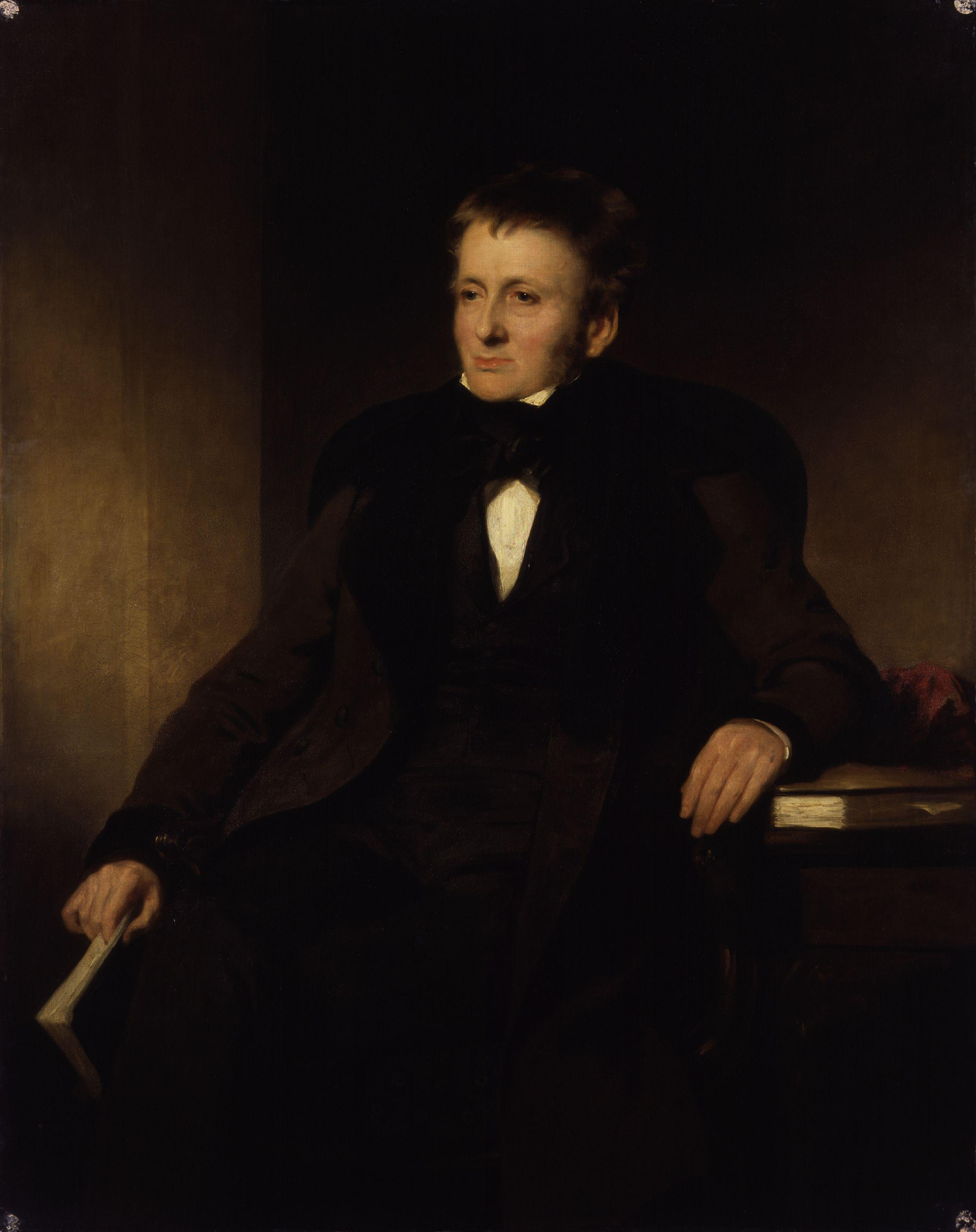
de Quincey, Thomas - An A-Z post

Thomas de Quincey was a professional journalist living in the Romantic period, and his most well known piece of work is Confessions of an English Opium Eater.

Picture from en.wikipedia.org
He had early ambitions to be a poet, although his skill and talent were never good enough for him to succeed. He even spent time living with the Wordsworths at Dove Cottage, and stayed there after they left, trying to soak up some of the atmosphere in which William Wordsworth had written his own poetry.

Confessions of an English Opium Eater is an autobiographical account of de Quincey's own battle and experiences with his addiction, although the narrator within it is never officially declared as being him. It charts the days leading up to his first experience and the hallucinations he descends into at the peak of his 'hobby'.


A to Z Challenge [2013]

  ~~~~~~~~~~~~~~~~~~~~~~~~~~~~~~~~~~~~~~~~~~~   

This post is part of the A-Z Blogging Challenge. To get involved and check out other blogs taking part just click here. You won't be disappointed!


   ~~~~~~~~~~~~~~~~~~~~~~~~~~~~~~~~~~~~~~~~~~~

Percy Bysshe Shelley - An A-Z post

Picture from www.athenamillennium.it
Percy Bysshe Shelley was a Romantic poet, regarded as one of the finest in the English language. He was known for writing long narrative poems, verse dramas and Romantic allegories of classical mythology.

He died before his thirtieth birthday, and so missed the opportunities to retrospectively assess his own works as other writers of the period tended to do.

It was his second wife, Mary Wollstonecraft Shelley (of Frankenstein fame), who put together a comprehensive collection of all of his works so that it would be promoted after his death. In doing this, she put forward an image of Shelley that was not exactly true to the real man. He was not the other-worldly Romantic genius, sensitive to his surroundings kind of guy at all.
In fact, his very first poem Queen Mab, was filled with attacks on the monarchy and religion which could only have been aimed at upsetting the establishment.

One of his poems that I particularly enjoyed throughout my studies was Ozymandias:


I met a traveller from an antique land
Who said: "Two vast and trunkless legs of stone
Stand in the desert. Near them on the sand,
Half sunk, a shattered visage lies, whose frown
And wrinkled lip and sneer of cold command
Tell that its sculptor well those passions read
Which yet survive, stamped on these lifeless things,
The hand that mocked them and the heart that fed.
And on the pedestal these words appear:
`My name is Ozymandias, King of Kings:
Look on my works, ye mighty, and despair!'
Nothing beside remains. Round the decay
Of that colossal wreck, boundless and bare,
The lone and level sands stretch far away".

Poem taken from http://www.online-literature.com


A to Z Challenge [2013]

  ~~~~~~~~~~~~~~~~~~~~~~~~~~~~~~~~~~~~~~~~~~~   

This post is part of the A-Z Blogging Challenge. To get involved and check out other blogs taking part just click here. You won't be disappointed!


   ~~~~~~~~~~~~~~~~~~~~~~~~~~~~~~~~~~~~~~~~~~~

Thursday, 18 April 2013

Oroonoko, Aphra Behn - An A-Z post

Picture from world80books.blogspot.com
Oroonoko is the story of an African prince who falls in love with a girl that his grandfather, the King, also has an eye for. The girls feelings are reciprocated to the Prince and they agree to marry.

Unfortunately the King takes exception to this and claims her as part of his harem, and when the Prince stages a failed rescue he is sold as a slave as punishment and his wife is killed.

The Prince is sent to Surinam where he is put into a slave camp, but his fellows recognise him as royalty and treat him accordingly. Although he doesn't live the life that the other slaves do, and has certain privileges afforded him by the colonists at the end of the day he knows he is still just a slave with no hope of a free life.

Aphra Behn is considered to be the first woman in England to make her living by writing. She wrote many plays as well as poetry and made significant contributions to the early development of the novel.

I enjoyed reading Oroonoko and would never have discovered it if not for this course. It is the only novel so far that has actually moved me to tears in reading it.


A to Z Challenge [2013]

  ~~~~~~~~~~~~~~~~~~~~~~~~~~~~~~~~~~~~~~~~~~~   

This post is part of the A-Z Blogging Challenge. To get involved and check out other blogs taking part just click here. You won't be disappointed!


   ~~~~~~~~~~~~~~~~~~~~~~~~~~~~~~~~~~~~~~~~~~~

Tuesday, 16 April 2013

Mutiny on the Bounty - An A-Z post

We have been studying the non-fictional travel writing of the Mutiny on the Bounty, which follows the journey of Captain Bligh and 18 of his shipmates.

They are cast adrift of the HMS Bounty by Fletcher Christian, the main brain behind the mutiny against the captain and some of his most loyal followers.

Picture from www.7tavern.com
The mutiny occurred on 28th April 1789, the very same day that workers in Paris sacked the factories of the Reveillon and Henriot during the French Revolution.
In fact, the French Revolution has been likened to the circumstances surrounding the Bounty. Captain Bligh is said to represent the embodiment of what is seen as lawfulness, order, duty, respect. All things that could be considered of the French monarch at the time.
In contrast, Christian represents the fury, outrage, insult and illegality  also associated with the people of France rebelling against their leader.

Bligh's account of the mutiny against him the following year made the British rulers very anxious, worried that the revolutions may creep across the Channel.

Fletcher Christian and his band of mutineers never returned to England, living out there days instead on the Pacific Islands where they'd abandoned Bligh.

Through perseverance and determination Bligh managed to survive his ordeal, as did most of his men, and return to England to give account for himself and those that had betrayed him.

He was cleared of any charges and went on with his life at sea.


A to Z Challenge [2013]

  ~~~~~~~~~~~~~~~~~~~~~~~~~~~~~~~~~~~~~~~~~~~   

This post is part of the A-Z Blogging Challenge. To get involved and check out other blogs taking part just click here. You won't be disappointed!


   ~~~~~~~~~~~~~~~~~~~~~~~~~~~~~~~~~~~~~~~~~~~

Saturday, 13 April 2013

The Lonely Londoners, Sam Selvon - An A-Z post

Sam Selvon was born in Trinidad in 1923 to East Indian parents. He was educated in San Fernando but left when he was 15.

Picture from kevinfromcanada.wordpress.c...
From 1940-1945 he worked as a wireless operator with the Royal Naval Reserve and then moved to the Port of Spain, where he started work as a reporter for the Trinidad Guardian. It was while he was here that he began writing his stories.

He moved over to London in the 1950s and then finally to Alberta, Canada in the late 1970s. He died of a heart attack in 1994 on a final return trip to Trinidad.

The Lonely Londoners was published in 1956, and was probably the first work of literature to focus on poor and working-class blacks.
The story follows West Indian characters in post-World War II London, characters that are part of the Windrush Generation, when 493 passengers arrived from Jamaica to start a new life.

The story follows them on their daily lives in London, as they go to and try to find work. There is one central character called Moses Aloetta who is the unifying central character, who has been a veteran in London for ten years. The characters gather at his home on a regular basis to swap stories, but he finds that as he gets older he grows more homesick with each passing day.

The theme of study for The Lonely Londoners is memory and migration, following those that have traveled so far to the UK from their homeland.


A to Z Challenge [2013]

  ~~~~~~~~~~~~~~~~~~~~~~~~~~~~~~~~~~~~~~~~~~~   

This post is part of the A-Z Blogging Challenge. To get involved and check out other blogs taking part just click here. You won't be disappointed!


   ~~~~~~~~~~~~~~~~~~~~~~~~~~~~~~~~~~~~~~~~~~~

Friday, 12 April 2013

Keeping up with my studies - An A-Z post

A little departure from the authors and works that have so far been the topics of my A-Z challenge today (mostly because I don't have an author or a book beginning with K!).

It's been great doing this challenge, it's given me the chance to revise some of the things I studied ages ago and keep the ideas surrounding them fresh in my mind.

At times since the start of the course last October, I have found it difficult to find the time to study and read properly and it can be hard to keep the enthusiasm going.

I find it particularly tough around assignment due dates as all my efforts are going into the essay and the stories relating to it, which means I fall behind a little with the rest of the reading.

The exam itself is only two months tomorrow (eek!) and I've now started to worry about revision strategies. I need to start going over the topics again from the early part of the course as well as finishing off the last few texts and assignments.

The next few weeks are going to be hectic, and I hope that if I can't keep strictly on track I can at least hang on to the shirt tails of everyone else flying away.

This is like the last stretch now though, I can see the end I when I get there I have the Game of Thrones books waiting for me.


A to Z Challenge [2013]

  ~~~~~~~~~~~~~~~~~~~~~~~~~~~~~~~~~~~~~~~~~~~   

This post is part of the A-Z Blogging Challenge. To get involved and check out other blogs taking part just click here. You won't be disappointed!


   ~~~~~~~~~~~~~~~~~~~~~~~~~~~~~~~~~~~~~~~~~~~

Thursday, 11 April 2013

James Joyce, Dubliners - An A-Z post

Picture courtesy of www.keelinggallery.com
James Joyce was an Irish writer born in 1882. His family was prosperous at the time off his birth, but his fathers unreliability meant that their financial situation declined rapidly. The family moved around a lot, living at twenty-three different addresses by the time Joyce left Dublin.

He studied modern languages at University College and, upon graduating, headed off to Paris to study medicine.
However, he was called back to Ireland in 1903 when his mother fell very ill and eventually died.

Joyce remained in Ireland until 1904, and after leaving he only returned another four times in his life, leaving for the last time in 1912. Once he left he found the subject matter for his writing, and wrote passionately about the place he once called home.

By 1907, Joyce had finished 15 short stories that would he put together to make up the collection Dubliners.

This collection was to provide a moral history of his country as he saw it, and Dublin in particular was to him a centre of paralysis. The stories cover four different aspects: childhood, adolescence, maturity and public life and they are arranged in order to reflect these concepts.

It wasn't until 1914 that Dubliners was finally published, even though Joyce submitted it to plenty of publishers. At the time some of the stories were considered to be too risque for publishing, and Joyce was asked to remove and amend parts of the them, which of course he refused to do.

The theme for this set text is the 20th Century city, and how Dublin is represented through the different characters of the stories.


A to Z Challenge [2013]

  ~~~~~~~~~~~~~~~~~~~~~~~~~~~~~~~~~~~~~~~~~~~   

This post is part of the A-Z Blogging Challenge. To get involved and check out other blogs taking part just click here. You won't be disappointed!


   ~~~~~~~~~~~~~~~~~~~~~~~~~~~~~~~~~~~~~~~~~~~

Wednesday, 10 April 2013

Inside Brian Friel - An A-Z post

Photo courtesy of alternativetheatreworks.com
Brian Friel is an author and playwright, born in Omagh, County Tyrone in 1929.

Although he eventually found his niche as a writer, he originally followed in his fathers footsteps and became a teacher, which he continued for ten years. It was while teaching that he met and marrried Anne Morrison, with whom he went on to have four daughters and one son.

He began writing, and his themes focused a lot on the divide between the religious and rural part of Ireland and the more progressive Ireland of the north and urban south.

Two plays of his that were made into films were Philadelphia, Here I Come and Dancing at Lughnasa.

It is the second of these plays that is the focus of my OU study. The play centres on five unmarried sisters and their life in their cottage situated just outside of Ballybeg, following them as they deal with poverty and financial insecurity.

They have a brother who returns home from being a missionary in Uganda, and it becomes clear that he has abandoned much of his faith and 'gone native'. The other residents living in and around Ballybeg don't think much of his behaviour and it has consequences for the whole family.

Brian Friel is one of the few authors being studied that is still alive today, and he currently resides in Donegal.


A to Z Challenge [2013]

  ~~~~~~~~~~~~~~~~~~~~~~~~~~~~~~~~~~~~~~~~~~~   

This post is part of the A-Z Blogging Challenge. To get involved and check out other blogs taking part just click here. You won't be disappointed!


   ~~~~~~~~~~~~~~~~~~~~~~~~~~~~~~~~~~~~~~~~~~~

Tuesday, 9 April 2013

Hoffman, E T A - An A-Z post

E T A Hoffmann was born in Prussia in 1776. He endured an erratic career as a civil servant and had to exploit his interest in music, both composition and journalism, to make a living for himself in Warsaw.
From here he was deported by the French authorities to Berlin, prompting a move to Bamberg and then Dresden.

He somehow got caught up in the Battle of Dresden in August 1813 and then the Battle of the Nations in October of the same year.

Along his travels Hoffmann began producing a large amount of writing and his first collection of short stories was entitled Fantasiestucke, published in 1813.

Extensively read in both German and French translations, his works weren't converted to English until into the middle of the 19th Century.

The theme under which Hoffmann is studied in this course is Romantic Lives, and his work is largely considered to be the culmination of German Romanticism.

Notable works include 'A New Year's Eve Adventure'(1815), 'The Sandman' (1816) and 'Councillor Krespel' (1818)


A to Z Challenge [2013]

  ~~~~~~~~~~~~~~~~~~~~~~~~~~~~~~~~~~~~~~~~~~~   

This post is part of the A-Z Blogging Challenge. To get involved and check out other blogs taking part just click here. You won't be disappointed!


   ~~~~~~~~~~~~~~~~~~~~~~~~~~~~~~~~~~~~~~~~~~~           

Monday, 8 April 2013

Gronniosaw, James Albert Ukawsaw - An A-Z post

James Albert Ukawsaw Gronniosaw was a one-time African slave, who published the story of his journey from Africa to the Americas, and then finally to Europe as A Narrative of the Most Remarkable Particulars in the Life of James Albert Ukawsaw Gronniosaw, An African Prince, Written by Himself in 1770.

Born in the kingdom of Bornu, at the age of 15 Gronniosaw was duped by a traveling merchant into traveling with him to the Gold Coast where he was eventually sold to a Dutch captain. He was then bought by an American and was taught to read and brought up as a Christian.
He was bought by a Dutch minister, and remained with him for thirty years until the ministers death. Gronniosaw then spent time as a privateer on British ships, and a servant for a merchant.
Eventually making his way into Europe, he met his wife Betty who was a weaver in London.
He traveled to Amsterdam and spent time living there, in Norwich and finally settled in Kidderminster.

The autobiography follows a three-stage sequence. The first phase is his African childhood, where he lived in unhappiness, ignorance and a state of confusion.
The second phase of the journey is a spiritual one, with his conversion to Christianity.
The final phase carries on his spiritual journey, but his life is thwarted at all corners by hardships and disappointments. These trials he believed were tests set to him by God, and ultimately strengthened his faith.

The theme of this particular text is 'journeys in the long eighteenth century', and this is the first biographical piece to be looked at. Following on from the fictional works of Aphra Behn and Voltaire, it demonstrates how such non-fictional accounts were used to bring the realities if the slave trade into the minds of the public.


A to Z Challenge [2013]

  ~~~~~~~~~~~~~~~~~~~~~~~~~~~~~~~~~~~~~~~~~~~   

This post is part of the A-Z Blogging Challenge. To get involved and check out other blogs taking part just click here. You won't be disappointed!


   ~~~~~~~~~~~~~~~~~~~~~~~~~~~~~~~~~~~~~~~~~~~           

Saturday, 6 April 2013

Fritz Lang, Metropolis - An A-Z post

Photo courtesy of www.listal.com
Fritz Lang was a German director, famous for the 1927 silent movie Metropolis. He first conceived of the idea for the film following a visit to New York in 1924. The sight of the skyscrapers filled his imagination, and this is seen clearly in the movie he went on to create.


The film started out as a book written in 1925 by his then wife, Thea von Harbou. Far from being an inspiration for the film though, the novel was written specifically as a tried-and-tested publicity device for the film that would follow.


Metropolis is a futuristic dystopian fantasy with elements of science fiction thrown in, and I've noticed on the forums for this course that opinion is divided about it.
I for one definitely enjoyed it, and didn't even notice its running time of over 2 hours.

The film centres on the rich leader of the city, living above ground and looking out over it's skyscrapers. He represents the Head, in charge of the smooth running of the city as a whole.
Picture courtesy of www.flyanddandy.com
At the opposite end of the spectrum are the workers, living beneath ground and doing the actual work to make sure the city thrives. They are the Hand of the city.

The moral of the film is that the Heart is what connects the Head with the Hand, the Heart being a mediator to bridge the social gap between the workers and leaders.

It was odd and eerie, and the characters and actors in it kept me mesmerised throughout. I was drawn the most to Brigitte Helm, who portrayed both the 'original' good natured Maria, and also her evil robotic replacement. The two characters were polar opposites in every way and her interpretation of them both was excellent.

The theme for the study of this film is 20th Century cities, and this film shows much disparity between the rich living in the supraterranean part of the city, and the workers in the subterranean levels.

This film has been going around my mind a lot this week, the next assignment focuses on this film alongside Dubliners by James Joyce and various New York poems and stories. But more on those later!


A to Z Challenge [2013]

  ~~~~~~~~~~~~~~~~~~~~~~~~~~~~~~~~~~~~~~~~~~~   

This post is part of the A-Z Blogging Challenge. To get involved and check out other blogs taking part just click here. You won't be disappointed!


   ~~~~~~~~~~~~~~~~~~~~~~~~~~~~~~~~~~~~~~~~~~~           

Friday, 5 April 2013

Emily Bronte, Wuthering Heights - An A-Z post

Photo courtesy of claudialucia-malibrairie.bl...

Wuthering Heights, now considered to be among the classics of English Literature, was the only novel penned by Emily Bronte. Published in 1847, it first appeared under her pen name Ellis Bell.

Emily was one of six children, but only four of them survived to adulthood. One of her elder sisters is Charlotte Bronte, famous for her novel Jane Eyre.

Upon first release, Wuthering Heights was met by a mixed reception, and many believed it to have been written by a man due to its violence and passion.

Wuthering Heights in A230 is studied with the theme of home and abroad in mind, one that does not seem obvious at first thought.
The 'home' refers to both homes in the story, Wuthering Heights itself and Thrushcross Grange.
The 'abroad' however, refers more to their geographic position. Mr Lockwood, the first character of the tale, is not originally from the north where the story is set, and so he feels somewhat like he has ventured abroad, to places unknown to him. This was the attitude by many people from London and the south.
Heathcliff's character is also relevant to the theme of abroad, as his origins are unknown and his travels between visits to the Heights sent him to far lands and places.

Of all the set texts, Wuthering Heights was one I was looking forward to reading. I have read it once before but I have loved the study of going deeper into the meaning and thoughts within the story itself. This is definitely going to be one of my options on the exam.


A to Z Challenge [2013]

  ~~~~~~~~~~~~~~~~~~~~~~~~~~~~~~~~~~~~~~~~~~~   

This post is part of the A-Z Blogging Challenge. To get involved and check out other blogs taking part just click here. You won't be disappointed!


   ~~~~~~~~~~~~~~~~~~~~~~~~~~~~~~~~~~~~~~~~~~~